

What is the power factor of T8 high output lamps?
May 23, 2025
As a supplier of T8 high output lamps, I often encounter inquiries about the power factor of these lighting products. Understanding the power factor is crucial for both lighting professionals and end - users, as it directly impacts energy efficiency, cost, and the overall performance of electrical systems. In this blog, I will delve into the concept of power factor in the context of T8 high output lamps.
What is Power Factor?
Power factor (PF) is a measure of how effectively electrical power is converted into useful work output in an alternating current (AC) circuit. In an ideal world, all the electrical power supplied to a device would be used for its intended purpose. However, in real - world AC circuits, some of the power is wasted due to the phase difference between voltage and current.
Mathematically, power factor is defined as the ratio of real power (P), measured in watts (W), to apparent power (S), measured in volt - amperes (VA). The formula for power factor is (PF=\frac{P}{S}). A power factor of 1 (or 100%) indicates that all the electrical power supplied is being used effectively, with no wasted power. A power factor less than 1 means that there is some inefficiency in the circuit, and reactive power (Q) is present. Reactive power is the power that oscillates between the source and the load, but does not perform any useful work.
Power Factor in T8 High Output Lamps
T8 high output lamps are a popular choice for commercial and industrial lighting applications due to their high lumen output and relatively long lifespan. These lamps can be either fluorescent or LED - based.
Fluorescent T8 High Output Lamps
Traditional fluorescent T8 high output lamps typically have a lower power factor. Fluorescent lamps require a ballast to regulate the current and start the lamp. Older magnetic ballasts used in fluorescent T8 lamps have power factors in the range of 0.5 - 0.6. This means that only 50 - 60% of the apparent power is being used as real power, and the rest is wasted as reactive power.
Newer electronic ballasts have improved the power factor of fluorescent T8 lamps. Electronic ballasts can achieve power factors of up to 0.9 or higher. They work by converting the incoming AC power to DC and then back to a high - frequency AC, which reduces the phase difference between voltage and current, thus improving the power factor.
LED T8 High Output Lamps
LED T8 high output lamps generally have a much higher power factor compared to fluorescent lamps. Most modern LED T8 lamps are designed with high - efficiency drivers that can achieve power factors of 0.95 or even higher. The high power factor of LED lamps is due to their solid - state nature, which allows for more precise control of the electrical current and reduces the presence of reactive power.
Importance of Power Factor in T8 High Output Lamps
Energy Efficiency
A high power factor means that more of the electrical power supplied to the lamp is being used to produce light. This results in lower energy consumption and reduced electricity bills. For large - scale lighting installations, such as in warehouses or factories, the difference in energy consumption between lamps with low and high power factors can be significant over time.
Electrical System Capacity
Lamps with a low power factor draw more current from the electrical system than lamps with a high power factor for the same amount of real power. This can lead to overloading of electrical distribution systems, increased wear and tear on electrical equipment, and higher losses in the transmission and distribution lines. By using T8 high output lamps with a high power factor, the overall electrical system capacity can be better utilized.
Compliance with Regulations
Many countries and regions have regulations regarding the power factor of electrical equipment, including lighting products. For example, some energy efficiency standards require lighting products to have a minimum power factor to be sold in the market. As a supplier, it is important to ensure that our T8 high output lamps meet these regulatory requirements.
Our T8 High Output Lamps and Power Factor
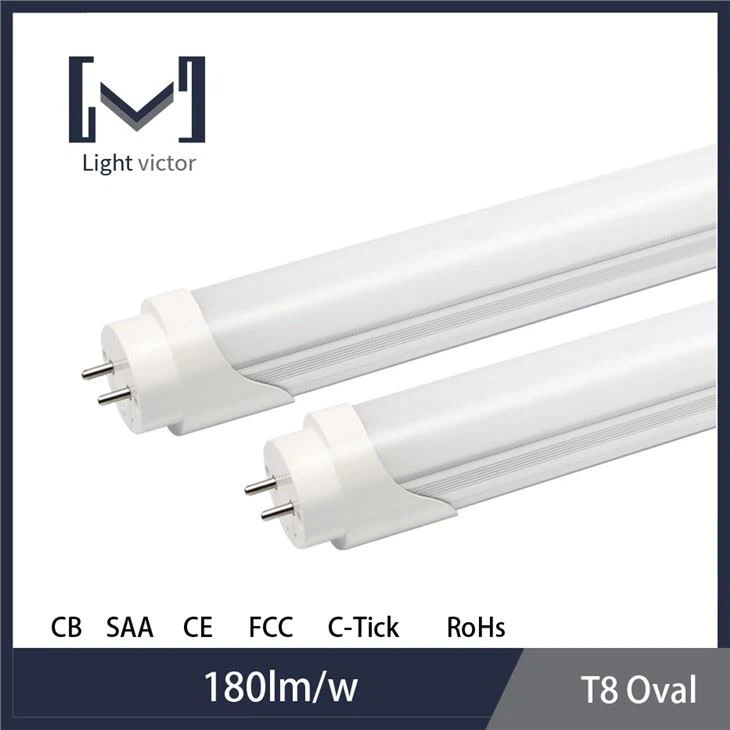
As a supplier, we are committed to providing high - quality T8 high output lamps with excellent power factor performance. Our LED T8 high output lamps are designed with advanced drivers that ensure a power factor of at least 0.95. This not only helps our customers save on energy costs but also ensures compliance with the latest energy efficiency regulations.
We also offer a range of other high - quality lighting products, such as High lumen LED t5 T8 Tube Light, LED Rotatable Tube Light, and Compatible T5 LED Tube Light. These products are designed to meet the diverse lighting needs of our customers while maintaining high energy efficiency.

How to Choose T8 High Output Lamps Based on Power Factor
When choosing T8 high output lamps, it is important to consider the power factor along with other factors such as lumen output, color temperature, and lifespan. Here are some tips:
- Check the Product Specifications: Look for the power factor value in the product datasheet. A power factor of 0.9 or higher is generally considered good for energy - efficient lighting.
- Consider the Application: For applications where energy efficiency is a top priority, such as large - scale commercial buildings, choose lamps with a high power factor. For less - critical applications, a slightly lower power factor may be acceptable.
- Evaluate the Cost - Benefit: While lamps with a high power factor may have a higher upfront cost, the long - term energy savings can often offset the initial investment.
Contact Us for Procurement
If you are interested in purchasing our T8 high output lamps or any of our other lighting products, we would be delighted to have a procurement discussion with you. Our team of experts can provide you with detailed product information, technical support, and competitive pricing. Whether you are a lighting contractor, facility manager, or end - user, we have the right lighting solutions for your needs.
References
- Chapman, S. J. (2012). Electric Machinery Fundamentals. McGraw - Hill.
- Horowitz, P., & Hill, W. (1989). The Art of Electronics. Cambridge University Press.