

What are the break - even points for T6 high output projects?
May 30, 2025
As a supplier of T6 high output projects, understanding the break - even points is crucial for both our business and our customers. In this blog, I will delve into what break - even points are, why they matter, and how they specifically apply to T6 high output projects.
What are Break - Even Points?
The break - even point is a fundamental concept in business and finance. It represents the level of sales at which total revenue equals total costs, resulting in neither a profit nor a loss. Mathematically, the break - even point can be calculated in two main ways: in terms of units sold and in terms of sales revenue.
The formula for calculating the break - even point in units is:

[BEP_{units}=\frac{Fixed;Costs}{Selling;Price;Per;Unit - Variable;Cost;Per;Unit}]
The formula for calculating the break - even point in sales revenue is:
[BEP_{revenue}=\frac{Fixed;Costs}{1-\frac{Variable;Costs}{Sales;Revenue}}]
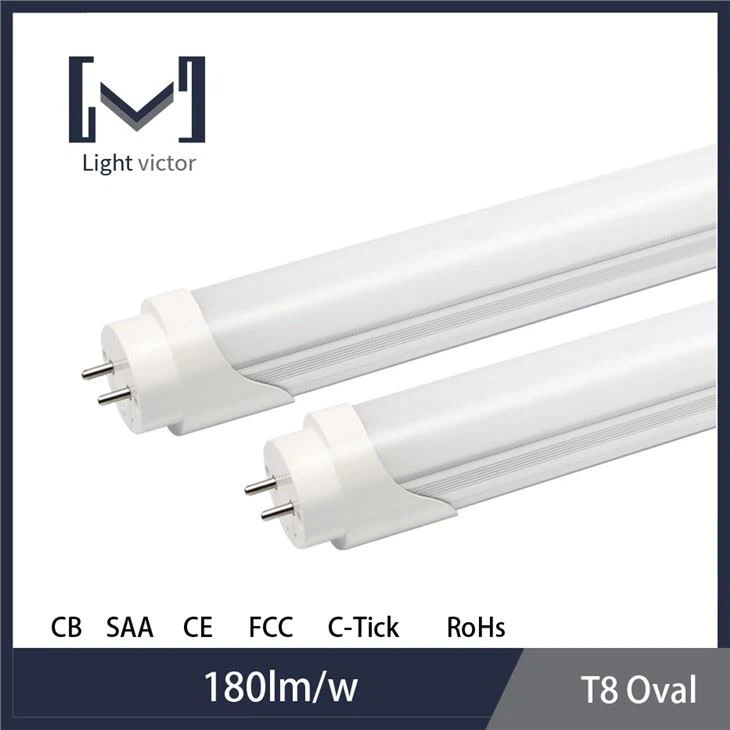
Fixed costs are expenses that do not change with the level of production or sales, such as rent for the production facility, salaries of permanent staff, and equipment depreciation. Variable costs, on the other hand, vary directly with the level of production or sales. For T6 high output projects, variable costs may include the cost of raw materials like the LED chips, lenses, and housing materials used in manufacturing products such as the LED Rotatable Tube Light, Compatible T5 LED Tube Light, and High lumen LED t5 T8 Tube Light.
Why Do Break - Even Points Matter?
- Profitability Assessment: Break - even points provide a clear picture of the minimum level of sales needed to start making a profit. For our T6 high output projects, knowing the break - even point helps us set realistic sales targets. If we can sell more units than the break - even quantity, we will start generating profits.
- Decision - Making: When considering new investments, product lines, or pricing strategies, the break - even analysis is an invaluable tool. For example, if we are thinking about upgrading our production equipment for T6 high output projects to improve efficiency, we can calculate how the change in fixed costs (the cost of the new equipment) and variable costs (potential savings in raw materials or labor) will affect the break - even point.
- Cost Management: Understanding the break - even point encourages us to focus on cost management. By reducing fixed costs (for example, by negotiating lower rent or optimizing staff levels) or variable costs (by sourcing cheaper but quality raw materials), we can lower the break - even point and increase the likelihood of making a profit at lower sales volumes.
Break - Even Points for T6 High Output Projects
-
Cost Structure in T6 High Output Projects
- Fixed costs in T6 high output projects include the cost of setting up the production line, which may involve purchasing specialized machinery for LED assembly, testing equipment, and factory infrastructure. Additionally, there are administrative costs such as office rent, management salaries, and marketing expenses. All these fixed costs need to be covered before we can make a profit.
- Variable costs are mainly related to the production of each unit of T6 high output products. The cost of LED chips, which are a crucial component of our tube lights, fluctuates depending on market supply and demand. Other variable costs include packaging materials, labor costs for assembly, and shipping costs.
-
Pricing Strategy and Break - Even
- Our pricing strategy for T6 high output products has a direct impact on the break - even point. If we price our products too high, the sales volume may be low, and it will take a longer time to reach the break - even point. Conversely, if we price our products too low, although we may be able to sell more units, the profit margin per unit may be insufficient to cover the fixed costs quickly. We need to find a balance. For instance, when pricing the LED Rotatable Tube Light, we consider factors such as its unique features, the cost of production, and the market price of similar products.
- Competition also plays a significant role in pricing. In the highly competitive LED tube light market, we need to ensure that our prices are competitive while still covering our costs. If our competitors offer similar products at lower prices, we may need to re - evaluate our cost structure and break - even analysis to maintain our market share.
-
Sales Volume and Break - Even
- To reach the break - even point, we need to achieve a certain sales volume. This depends on our marketing and sales efforts. We can use various marketing channels to promote our T6 high output products, such as online marketplaces, industry trade shows, and direct sales to retailers. By increasing the visibility of our products like the Compatible T5 LED Tube Light and High lumen LED t5 T8 Tube Light, we can attract more customers and increase the sales volume.
- Market demand also affects the sales volume. The demand for T6 high output LED tube lights is influenced by factors such as the growth of the lighting industry, energy - efficiency requirements, and consumer preferences for high - quality lighting solutions. By staying informed about market trends and adjusting our production and sales strategies accordingly, we can better predict and achieve the sales volume needed to reach the break - even point.
Conclusion and Call to Action
In conclusion, understanding the break - even points for T6 high output projects is essential for the success of our business. By carefully managing our costs, setting appropriate prices, and achieving the right sales volume, we can reach the break - even point and start generating profits.
If you are interested in purchasing our T6 high output products, such as the LED Rotatable Tube Light, Compatible T5 LED Tube Light, or High lumen LED t5 T8 Tube Light, we invite you to engage in a procurement discussion with us. Our products are designed to meet the highest standards of quality and performance, and our competitive pricing will help you achieve your business goals. Contact us for more information and let's explore how we can work together to meet your lighting needs.
References
- Horngren, Charles T., George Foster, and Srikant M. Datar. Cost Accounting: A Managerial Emphasis. Pearson, 2018.
- Brigham, Eugene F., and Joel F. Houston. Fundamentals of Financial Management. Cengage Learning, 2020.