

How much does a g5 pin t8 bulb cost?
Nov 12, 2026
If you’re in the market for T8 lighting, you’ve likely come across G5 pin T8 bulbs—one of the most common and versatile options for retrofitting commercial spaces, warehouses, office buildings, and even residential areas with industrial-grade lighting. As a T8 bulb supplier, I get asked this question at least a dozen times a day: How much does a G5 pin T8 bulb cost? The answer isn’t a single number, because it depends on a wide range of factors, from quality and features to where you source it. Today, I’m breaking down what goes into G5 pin T8 bulb pricing, the key differences between models, and how to get the best value for your money. I’ll also share context on related LED tube solutions we offer at our warehouse, to help you make a fully informed choice.
First, let’s start with the basics to set a foundation: what makes a G5 pin T8 bulb unique, and why does that matter for pricing? The “G5 pin” refers to the bi-pin base size—G pin means a bi-pin base, and 5 is the distance between the two pins in millimeters. That’s different from the larger G13 pin base you’ll see in standard T12 or some other T8 bulbs. The “T8” stands for tubular shape with an 8/8 inch diameter, so 1 inch total. G5 pin T8 bulbs are designed specifically to work with certain ballasts, which is a critical detail because compatibility directly impacts cost and installation. Cheaply made G5 pin bulbs often skip ballast compatibility testing, leading to premature burnout, so paying a little more for a tested, model-specific bulb will save you money in the long run on replacements and labor.
Now, let’s dive into the cost range. For a basic, entry-level G5 pin T8 bulb (usually 10-15 watts, 2700K-5000K color temperature, no frills, standard brightness), you’ll typically pay between $3 and $8 per bulb. These are great for small, low-traffic spaces like closets or home offices, where lighting demand is low and budget is tight. They’re often made with cheaper LED chips, plastic housings, and minimal thermal management, so they might last 20,000 to 30,000 hours—roughly 2 to 3 years of regular use.
Moving to mid-range G5 pin T8 bulbs, which are the most popular for commercial and industrial applications, the price jumps to $8 to $15 per bulb. This tier includes bulbs with better thermal systems (aluminum heat sinks that prevent overheating), higher CRI (Color Rendering Index, usually 80 or 85, which means colors look more natural), and longer lifespans of 30,000 to 50,000 hours. Mid-range bulbs are also often tested for compatibility with electronic and magnetic ballasts, so you can retrofit spaces without rewiring, which cuts down on installation costs. For example, if you’re outfitting a small retail space or a 10,000 sq ft warehouse, mid-range G5 pin T8s strike the perfect balance between performance and cost, without the premium price tag of top-tier models.
The high-end G5 pin T8 bulb segment, reserved for industrial or specialized commercial use, costs $15 to $30 per bulb, and sometimes more for custom variants. These bulbs feature top-tier LED chips (high CRI 90 or higher), wide-angle light distribution, waterproof or dustproof housing (IP65 or higher), and lifespans of 50,000 to 100,000 hours. They’re designed for high-traffic, harsh environments like manufacturing floors, cold storage facilities, or outdoor covered areas, where reliable, bright light is non-negotiable. The extra cost here is worth it because you’ll need fewer replacements over time, and they reduce maintenance costs drastically in hard-to-reach areas like high warehouse ceilings.
Now, why is there such a big gap between entry-level and premium pricing? Let’s break down the factors that drive G5 pin T8 bulb costs, because understanding these will help you avoid overpaying or underbuying. The first and biggest factor is LED chip quality. The LED chip is the core of the bulb—cheaper chips produce dimmer light, burn out faster, and have inconsistent color temperatures. High-quality chips from manufacturers like Samsung or Philips, which are used in mid-range and premium bulbs, cost more upfront but deliver more consistent light and longer life. Another key factor is ballast compatibility. Many older facilities still use magnetic ballasts, and not all G5 pin T8 bulbs are compatible with these. Entry-level bulbs often only work with new electronic ballasts, so if you have a space with outdated magnetic ballasts, you’ll either have to rewire (a big added cost) or pay a bit more for a bulb engineered to work with both ballast types. That’s a common hidden cost I see customers miss when buying the cheapest bulbs online.
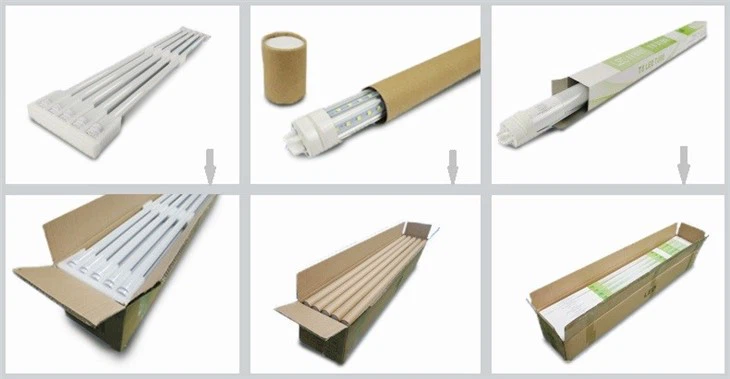

Thermal management is another often-overlooked factor that affects cost and performance. LED bulbs generate heat, and if that heat isn’t dissipated properly, the chips degrade quickly, leading to early burnout. Entry-level bulbs use plastic heat sinks or no heat sinks at all, which means they’ll fail within a couple years. Mid-range and premium bulbs use aluminum heat sinks, which conduct heat away from the LEDs efficiently, extending the bulb’s life by two to three times. For commercial spaces, where downtime from burned-out bulbs means lost productivity, that extra thermal design is worth every cent. Lumen output and CRI also play a role: a 4ft G5 pin T8 with 2,500 lumens (standard) costs less than a bulb with 3,500 lumens, which is needed for bright warehouse lighting. CRI matters too—if you’re running a art gallery or a retail space where product color is important, a CRI 90 bulb will cost more than a CRI 80 one, but it will help your products look better and attract more customers.
As a G5 pin T8 supplier, I also want to address a common question: how does G5 pin T8 compare to other LED tube options, like T5 tubes, for those of you who might be weighing your choices? Many customers come to us first asking about T5s, and for good reason—T5 tubes are a popular retrofitting option too. We offer a range of T5 LED lighting solutions, from basic integrated tubes to industrial-grade variants, to fit different needs. If you’re considering T5s, one of our most versatile offerings is the T5 LED Integrated Tube Light With Wide Angle Reflector For Industry Use, which is perfect for spaces needing focused, bright light, and works well as a direct alternative to high-output G5 pin T8s. For simpler applications, our T5 LED Tube Lights are a cost-effective option for small offices or residential use, and the 4ft Lighting Led Tubes Integrated T5 is a great choice for standard 4ft fixtures, making installation quick and easy. We also have the T5 LED Integrated Tube Light, a reliable all-purpose tube, and the LED T5 Integrated Double Tube Light With Reflector, which is ideal for spaces that need wider light coverage without the need for multiple bulbs. All of these T5 options are priced competitively, and they’re worth exploring if you’re not set on a T8 design.
Now, let’s talk about how to get the best price for your G5 pin T8 bulbs, because as a supplier, I want our customers to get value, not just cheap bulbs. The first tip is to buy in bulk. Most suppliers, including us, offer tiered pricing: the more bulbs you buy, the lower the per-unit cost. For example, a bulk order of 100 G5 pin T8 bulbs will often cost 10-20% less per bulb than a small order of 10. That’s a huge savings if you’re outfitting an entire building or warehouse. Another tip is to consider total cost of ownership, not just upfront price. A $5 entry-level bulb that lasts 20,000 hours costs $0.00025 per hour of use, while a $12 mid-range bulb that lasts 50,000 hours costs $0.00024 per hour—almost the same, but with way better performance and fewer replacements. For a 50,000 sq ft warehouse with 1,000 bulbs, that adds up to thousands of dollars in savings on maintenance and labor over 5 years.
It’s also important to avoid unvetted suppliers. I’ve seen customers buy G5 pin T8 bulbs from generic online marketplaces for $2 each, only to have half of them burn out within 6 months, leading to costly replacements and installation fees. Reputable suppliers will provide product specs, compatibility guarantees, and warranty periods—we offer a 3-year warranty on all our G5 pin T8 bulbs, for example, which covers defects and premature failure, so you don’t have to worry about wasting money on faulty products. Another way to save is to ask about rebates or energy efficiency incentives. Many utility companies offer rebates for switching to LED lighting, because it reduces energy use. A $10 G5 pin T8 bulb might be partially or fully covered by a rebate, bringing your out-of-pocket cost down significantly.
Let’s also cover some common use cases to give you a real-world idea of how pricing works for different spaces. If you’re retrofitting a 1,000 sq ft small office, you’ll need about 20 4ft G5 pin T8 bulbs. For a basic entry-level setup, that’s 20 bulbs x $5 = $100 upfront, plus $20 in installation for a handyman, total $120. That will be enough lighting for a small office, but you might notice dimmer light during peak hours. For a mid-range setup, it’s 20 bulbs x $10 = $200, plus $20 installation, total $220, with brighter, more consistent light that will last 5 years. For a 50,000 sq ft warehouse, you might need 1,000 bulbs. Entry-level would be $5,000 upfront, plus $1,000 in labor to replace bulbs every 2 years, total $10,000 over 5 years. Mid-range would be $10,000 upfront, plus $400 in labor every 5 years, total $10,400—almost the same, but with way less downtime and better light for picking and shipping. For a cold storage facility, you’d need high-end, waterproof G5 pin T8 bulbs at $20 each, 1,000 bulbs = $20,000 upfront, but you’d only need to replace them every 10 years, with minimal labor, making it the most cost-effective long-term.
As a G5 pin T8 supplier, I’ve also noticed that demand for G5 pin T8s has held steady even as T5 and other LED tubes grow in popularity, because many commercial and industrial fixtures are still designed for G5 pin bases. If you’re in a fixture that uses G5 pins, retrofitting with a G5 pin T8 is often cheaper than replacing the entire fixture, which is a big plus for budget-conscious businesses. We also carry G5 pin T8 bulbs that are compatible with linear troffers, pendants, and high-bay fixtures, so no matter what your space uses, there’s a model that fits.
If you’re still unsure about which G5 pin T8 bulb is right for you, or if you want to compare pricing for bulk orders, we’re here to help. Whether you’re outfitting a single room or an entire industrial complex, we can provide custom quotes, help you calculate total cost of ownership, and answer any questions about compatibility, installation, or warranty. We also offer expert advice on choosing between G5 pin T8s and other LED tube solutions, like the T5 lines we carry, to make sure you get the best lighting for your specific needs.
For more information on our T5 LED lighting range, including industrial-grade options and budget-friendly tubes, you can explore our full selection by following our product links: the T5 LED Integrated Tube Light With Wide Angle Reflector For Industry Use, the T5 LED Tube Lights, the 4ft Lighting Led Tubes Integrated T5, the T5 LED Integrated Tube Light, or the LED T5 Integrated Double Tube Light With Reflector. These are all designed to meet different lighting needs, from small offices to large manufacturing facilities, so they’re worth checking out as you make your decision.
When it comes to G5 pin T8 bulb pricing, there’s no one-size-fits-all answer, but by understanding the factors that drive cost, comparing total cost of ownership to upfront price, and buying from a reputable supplier, you can find a bulb that fits your budget and delivers reliable, long-lasting lighting. If you’re ready to get a quote for G5 pin T8 bulbs for your space, or want to learn more about our LED tube offerings, don’t hesitate to reach out for a procurement consultation. We’re here to help you find the right lighting solution for your needs, at a price that works for your business.
References
- U.S. Department of Energy. (2023). LED Tube Lights: Performance, Costs, and Savings. Retrieved from energy.gov
- Lighting Research Center. (2022). Ballast Compatibility and LED Tube Performance. Retrieved from lrc.rpi.edu
- National Electrical Manufacturers Association. (2023. LED Lighting Product Specification and Certification Standards. Retrieved from nema.org
- Energy Star. (2023). Commercial LED Lighting Rebate Program Guidelines. Retrieved from energystar.gov
- International Dark-Sky Association. (2022. LED Lighting for Industrial and Commercial Spaces. Retrieved from darksky.org