

Can T6 LED tubes be used in a museum?
May 23, 2025
Can T6 LED tubes be used in a museum?
As a supplier of T6 LED tubes, I often get asked whether these lighting solutions are suitable for museums. Museums are unique spaces that require special lighting considerations to preserve artifacts, enhance the viewing experience, and create a safe and comfortable environment for visitors. In this blog post, I will explore the feasibility of using T6 LED tubes in museums, considering various factors such as light quality, energy efficiency, and compatibility.
Light Quality
One of the most critical aspects of museum lighting is the quality of light. Artifacts in museums are often sensitive to light, especially ultraviolet (UV) and infrared (IR) radiation, which can cause fading, discoloration, and damage over time. T6 LED tubes are known for their excellent light quality, as they produce very low levels of UV and IR radiation. This makes them a suitable choice for museums, as they can help protect valuable artifacts from light-induced damage.
In addition to low UV and IR emissions, T6 LED tubes also offer high color rendering index (CRI) values. CRI is a measure of how accurately a light source renders colors compared to natural sunlight. A high CRI value (typically above 90) means that the colors of the artifacts will appear more vibrant and true to life under the lighting. This is crucial in museums, where the accurate representation of colors is essential for the appreciation and study of art and historical objects.
Another important factor in museum lighting is the ability to control the direction and intensity of light. T6 LED tubes can be designed with adjustable optics, allowing for precise control of the light beam. This feature is particularly useful in museums, where different artifacts may require different lighting angles and intensities to highlight their unique features. For example, a sculpture may need a focused beam of light to emphasize its texture and form, while a painting may require a more diffuse light to reduce glare and evenly illuminate the surface.
Energy Efficiency
Energy efficiency is another key consideration in museum lighting. Museums typically operate for long hours and have a large number of lighting fixtures, which can result in high energy consumption and costs. T6 LED tubes are highly energy-efficient, consuming up to 80% less energy than traditional fluorescent tubes. This not only reduces the museum's energy bills but also has a positive environmental impact by reducing carbon emissions.
In addition to their low energy consumption, T6 LED tubes also have a long lifespan. LED technology is known for its durability, and T6 LED tubes can last up to 50,000 hours or more, compared to the 10,000 - 15,000 hours lifespan of traditional fluorescent tubes. This means less frequent replacement of lighting fixtures, reducing maintenance costs and downtime for the museum.
Compatibility
When considering using T6 LED tubes in a museum, compatibility with existing lighting systems is an important factor. Many museums have existing fluorescent lighting fixtures, and retrofitting them with T6 LED tubes can be a cost-effective solution. Most T6 LED tubes are designed to be compatible with standard fluorescent ballasts, making the replacement process relatively straightforward. However, it is important to note that some older ballasts may need to be removed or bypassed to ensure optimal performance of the LED tubes.
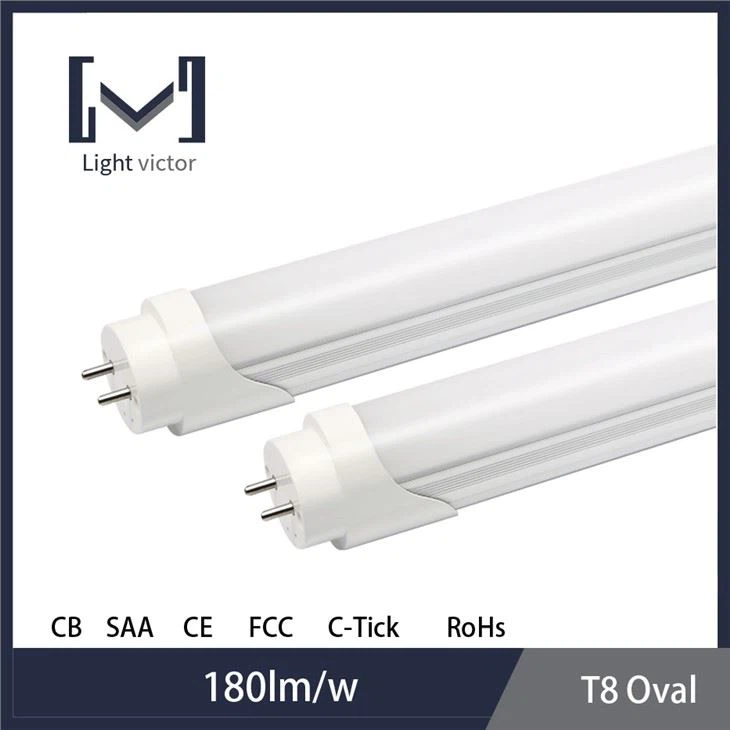
There are also different types of T6 LED tubes available to meet various lighting requirements. For example, High lumen LED t5 T8 Tube Light offers high brightness, which may be suitable for large exhibition halls or areas that require a lot of illumination. LED Rotatable Tube Light provides the flexibility to adjust the light direction, which can be useful for highlighting specific artifacts. Compatible T5 LED Tube Light is designed to work seamlessly with existing T5 fixtures, offering a convenient retrofit option.
Safety and Maintenance
Safety is always a top priority in museums, and T6 LED tubes offer several safety advantages. Unlike traditional fluorescent tubes, which contain mercury, T6 LED tubes are mercury-free, making them a safer option for both the environment and museum staff. In addition, LED tubes do not generate as much heat as fluorescent tubes, reducing the risk of fire and creating a more comfortable environment for visitors.
Maintenance is also relatively easy with T6 LED tubes. As mentioned earlier, their long lifespan means less frequent replacement. Additionally, LED tubes are more resistant to shock and vibration, which is important in a museum environment where there may be a lot of foot traffic and movement.
Considerations and Limitations
While T6 LED tubes offer many advantages for museum lighting, there are also some considerations and limitations to keep in mind. One potential issue is the initial cost. LED lighting solutions, including T6 LED tubes, generally have a higher upfront cost compared to traditional fluorescent tubes. However, the long-term energy savings and reduced maintenance costs often offset the initial investment.
Another consideration is the color temperature of the LED tubes. Different artifacts may require different color temperatures to achieve the desired visual effect. For example, warm white light (around 2700 - 3000K) may be more suitable for creating a cozy and inviting atmosphere for paintings, while cool white light (around 4000 - 5000K) may be better for highlighting the details of sculptures or historical artifacts. It is important to carefully select the color temperature of the T6 LED tubes based on the specific needs of the museum and the artifacts on display.

Conclusion
In conclusion, T6 LED tubes can be a great option for museum lighting. Their low UV and IR emissions, high CRI values, energy efficiency, and compatibility with existing systems make them suitable for preserving artifacts, enhancing the viewing experience, and reducing energy costs. With the availability of different types of T6 LED tubes, such as High lumen LED t5 T8 Tube Light, LED Rotatable Tube Light, and Compatible T5 LED Tube Light, museums can choose the lighting solutions that best meet their specific requirements.
If you are a museum curator, designer, or decision-maker looking for high-quality lighting solutions, I encourage you to consider T6 LED tubes. Our company offers a wide range of T6 LED tubes that are designed to meet the unique needs of museums. We are committed to providing excellent products and services, and we would be happy to discuss your lighting requirements and provide a customized solution. Please feel free to contact us to start a conversation about your museum lighting project.
References
- "Lighting for Museums and Galleries," Lighting Research Center, Rensselaer Polytechnic Institute.
- "LED Lighting in Museums: Best Practices," International Council of Museums (ICOM).
- "The Impact of Lighting on Artifacts," Smithsonian Institution.